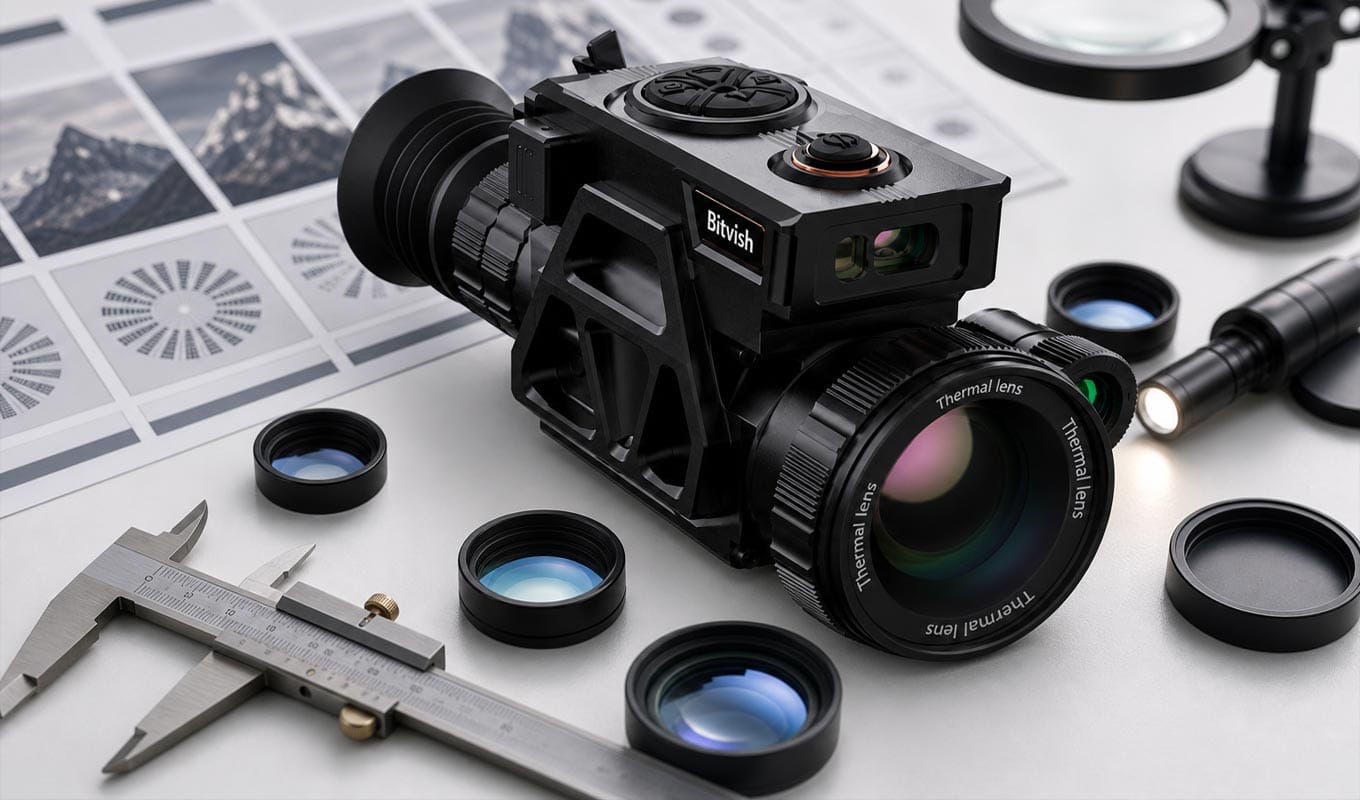
Many outdoor enthusiasts and amateur observers fall into a common trap when buying optical devices: picking cheap products only to find obvious quality downgrades after short-time use. Blurry imaging, severe color distortion, poor dustproof and waterproof performance, and exaggerated fake magnification are frequent flaws of cost-cutting optical goods.
Most ordinary buyers lack professional optical knowledge and cannot distinguish real high-performance configurations from empty marketing slogans. This article sorts out four decisive core parameters. By mastering these indicators, you can quickly identify shoddy products and pick cost-effective optical gear without overspending.
Objective Lens Diameter Determines Low-Light Observation Capacity
The objective lens is the key component that captures light, and its diameter directly affects brightness at dawn, dusk and cloudy days. Many cheap optical devices mark attractive parameters on brochures but use small-diameter lenses in real production to cut material costs.
A smaller objective lens leads to insufficient light intake, resulting in dark, grainy images in dim environments. For general outdoor wildlife watching and hiking, a 42mm objective lens balances portability and low-light performance; for twilight observation, 50mm or larger lenses are recommended.
Never trust products that only highlight magnification without clearly labeling the objective lens size. Formal qualified optical equipment will print complete specifications such as 8×42 on the body for easy verification.
Lens Coating Type Controls Image Contrast and Glare Resistance
Anti-reflective coating is the biggest hidden cost-saving point for inferior optical products. Low-end models often adopt single-layer or even uncoated lenses, while premium devices use fully multi-layer broadband coating.
Uncoated lenses produce heavy stray light and strong glare under backlight, causing washed-out colors and vague details. Fully multi-coated technology greatly improves light transmittance, restores true color and suppresses light scattering.
Some counterfeit merchants falsely label “full coating” to fool consumers. A simple identification trick: observe the lens surface under light. High-quality coated lenses show soft dark green or blue reflection, while cheap uncoated lenses have obvious white reflective highlights.
ED Extra-Low Dispersion Glass Eliminates Chromatic Aberration and Purple Fringing
Chromatic aberration is a typical flaw of low-cost optical glass. When observing distant objects, obvious purple and green fringing will appear at the edge of the frame, greatly reducing definition.
ED extra-low dispersion glass is the core solution to this problem. It can offset light refraction differences of different wavelengths and deliver sharp, distortion-free full-field images. Many budget manufacturers abandon ED glass and use ordinary optical glass to lower production costs, ignoring long-term viewing experience.
If you need long-distance observation such as bird watching and landscape shooting, ED glass is an unskippable core configuration. Do not compromise on this parameter for a cheaper price.
Nitrogen-Filled Sealed Structure Guarantees Long-Term Service Life
A large number of cheap optical devices omit nitrogen filling and full waterproof sealing. After outdoor use in humid, rainy or foggy environments, water vapor enters the lens barrel and forms fog inside, which cannot be eliminated and permanently damages the optical path.
Standard nitrogen-filled sealing realizes IPX7 waterproof and dustproof performance, effectively blocking moisture and fine dust, and avoids internal lens fogging all year round. This configuration reduces later maintenance and replacement costs, bringing higher long-term cost performance.
Note that partial sealing without nitrogen filling cannot resist temperature difference fogging. Check the official parameter sheet to confirm complete nitrogen filling and sealing certification before purchasing.
Summary
To avoid low-cost shrunken optical products, focus judgment on four core indicators: objective lens diameter, lens coating standard, ED glass configuration and nitrogen-filled sealed structure. Ignore fancy marketing buzzwords and exaggerated magnification propaganda, and judge product quality based on real, verifiable hardware parameters.
BITVISH equips all its optical products with standard fully multi-coated lenses, optional ED glass and complete nitrogen-filled sealing, removing intermediate markup costs while retaining full professional configurations. Our professional consulting team can provide targeted parameter matching suggestions according to your usage scenarios and budget.